Merchant Alternatives is reader-supported. When you make purchases through links on our site, we may earn a commission. This is always at no additional cost to you and helps us continue to provide accurate, transparent and up-to-date information on the things that matter most to your business, for free.
The office cleaning industry offers a unique opportunity to enter a high-demand market with relatively low startup costs. Businesses of all sizes require clean, organized, and sanitized workspaces to maintain productivity and create a positive impression on clients and employees. By starting an office cleaning business, you not only tap into this essential service but also enjoy the flexibility of scaling your operations based on your resources and goals. Whether you aim to operate independently or manage a team of cleaners, establishing a professional cleaning business involves careful planning, strategic marketing, and excellent customer service. With the right approach, you can build a profitable enterprise that thrives on repeat clients and long-term contracts.
Steps to Start an Office Cleaning Business
Research and Plan Your Business
Conduct market research to identify competitors and target clients in your area.
Develop a detailed business plan that includes your services, pricing strategy, marketing approach, and financial projections.
Choose Your Business Model
Decide whether to operate independently or purchase a franchise.
Select your niche: general office cleaning, specialized services (e.g., carpet cleaning, sanitization), or eco-friendly cleaning solutions.
Set Up Your Legal Structure
Register your business as a sole proprietorship, partnership, or LLC based on your needs.
Obtain necessary licenses and permits for operating in your locality.
Secure Funding
Estimate startup costs for equipment, supplies, insurance, and marketing.
Explore funding options such as personal savings, small business loans, or grants.
Purchase Equipment and Supplies
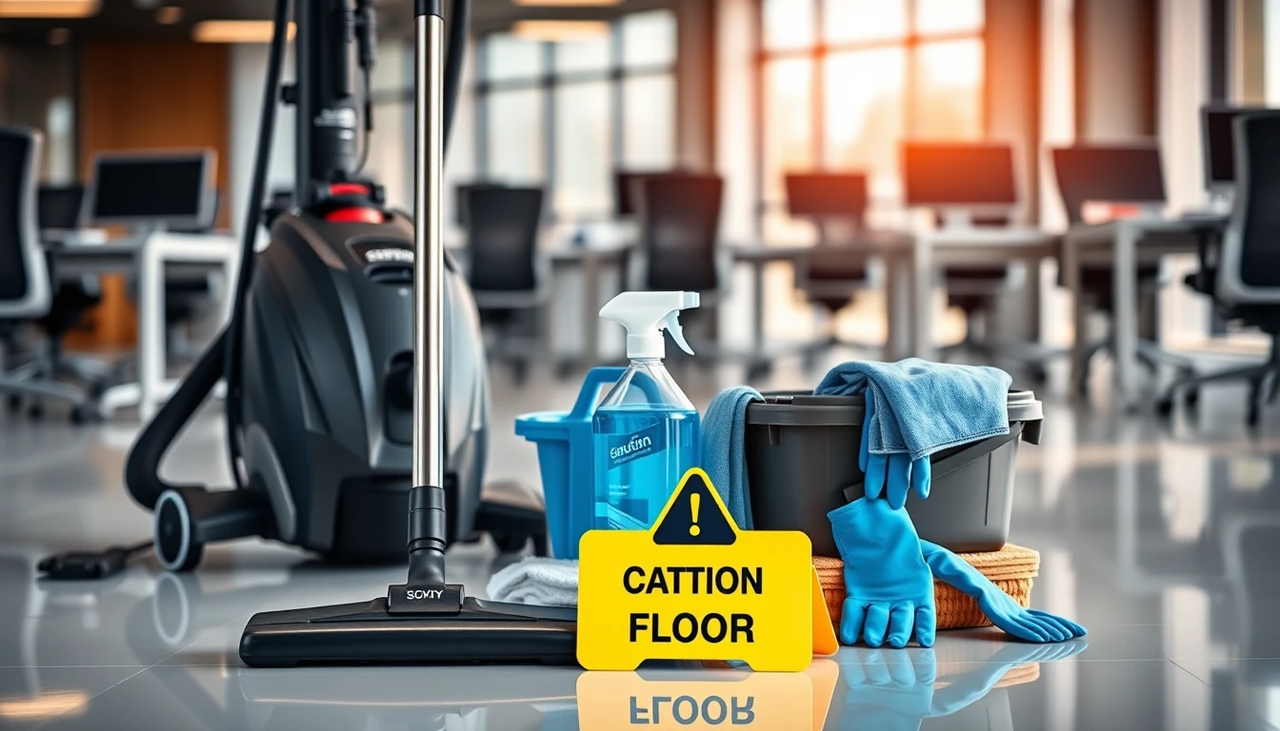
Invest in essential tools like mops, vacuum cleaners, disinfectants, gloves, and trash bags.
Consider specialized equipment if offering niche services like floor waxing or power washing.
Develop a Marketing Strategy
Create an online presence with a professional website showcasing your services.
Use social media platforms and local advertising to reach potential clients.
Network with businesses in your area to establish connections and secure contracts.
Obtain Insurance
Protect your business with liability insurance to cover potential damages or accidents during cleaning jobs.
Hire Staff (If Needed)
Recruit reliable cleaners with experience in commercial cleaning.
Provide training to ensure consistency in service quality.
Launch Your Business
Start small by targeting local offices and gradually expand as you gain experience and resources.
Focus on delivering excellent customer service to build trust and secure repeat clients.
By following these steps and maintaining a strong work ethic, you can establish a thriving office cleaning business that meets the growing demand for professional cleaning services.
What are the first steps to take when planning a commercial cleaning business
The first steps to planning a commercial cleaning business involve thorough preparation and strategic decision-making. Here’s a concise guide to get started:
Conduct Market Research Begin by identifying your target market, understanding client needs, and analyzing competitors. This research will help you define your unique selling points and develop a strategy to stand out in the commercial cleaning industry.
Create a Business Plan Develop a detailed business plan outlining your goals, services, pricing strategy, and financial projections. Include sections like an executive summary, company description, market analysis, and marketing plan to serve as a roadmap for your business.
Choose a Business Structure Decide on a legal structure (e.g., sole proprietorship, LLC, or corporation) and register your business. Obtain necessary licenses and permits to ensure compliance with local regulations.
Secure Funding Estimate startup costs for equipment, supplies, and marketing. Explore funding options such as personal savings, loans, or grants to cover initial expenses.
Invest in Equipment and Supplies Purchase quality cleaning tools and products tailored to your services. Essential items include vacuums, mops, disinfectants, and trash bags.
Develop a Marketing Strategy Create a strong brand identity and establish an online presence through a professional website and social media. Network with local businesses to secure contracts and build a client base.
By following these initial steps, you can lay a solid foundation for your commercial cleaning business and position it for long-term success.
How do I decide between franchising and operating independently
Deciding between franchising and operating independently for your commercial cleaning business involves weighing the benefits and challenges of each model. Here’s a breakdown to help you make an informed decision:
Franchising
Advantages:
Proven Business Model: Franchises come with an established business plan, reducing the trial-and-error phase.
Brand Recognition: Customers are more likely to trust a well-known brand, which can lead to quicker client acquisition.
Support and Training: Franchisors often provide comprehensive training, operational guidance, and ongoing support, making it easier to manage your business.
Marketing Assistance: National or regional marketing campaigns by the franchisor can boost visibility and save you time.
Disadvantages:
Upfront Costs and Royalties: Franchise fees and ongoing royalties can be significant, cutting into profits.
Limited Flexibility: You must adhere to the franchisor’s rules and guidelines, limiting your ability to innovate or customize services.
Best For: Entrepreneurs with some capital who want a faster launch, reduced risks, and structured support.
Operating Independently
Advantages:
Full Control: You have complete freedom over branding, operations, and service offerings.
Lower Costs: No franchise fees or royalties mean more potential profit margins.
Flexibility to Innovate: You can tailor your business model to meet local market demands without restrictions.
Disadvantages:
Higher Risk: Without an established system, there’s a greater chance of failure due to inexperience or unforeseen challenges.
More Responsibility: You’re solely responsible for marketing, customer acquisition, training, and operational systems.
Slower Growth: Building brand recognition and a client base from scratch takes time and effort.
Best For: Entrepreneurs who value autonomy, are willing to take on risks, and prefer to build a unique brand.
Key Considerations
When deciding:
Assess your financial situation—do you have the funds for franchise fees or prefer lower startup costs?
Evaluate your risk tolerance—are you comfortable with trial-and-error or prefer a proven system?
Consider your goals—do you want creative freedom or structured support?
Think about time—do you need quick results (franchise) or are you willing to grow gradually (independent)?
By aligning your choice with your resources, goals, and risk appetite, you can select the model that best suits your entrepreneurial journey.
What kind of training should I pursue to develop my cleaning skills
To develop your cleaning skills and excel in the commercial cleaning industry, pursuing structured training programs and certifications is essential. Here’s a guide to the types of training you should consider:
1. Foundational Cleaning Skills
Learn basic cleaning techniques for surfaces such as tile, glass, and wood.
Understand the proper use of cleaning products and equipment, including vacuums, mops, and disinfectants.
Training programs often begin with practical tasks like dusting, scrubbing bathrooms and kitchens, sweeping, and spot cleaning.
2. Safety Training
Familiarize yourself with workplace safety protocols, including handling chemicals safely and using personal protective equipment (PPE).
Learn procedures for dealing with biohazards, such as blood-borne pathogens and hazardous materials.
3. Specialized Cleaning Techniques
Pursue advanced training for tasks like carpet cleaning, floor waxing, or power washing.
Gain knowledge about industry-specific cleaning needs, such as sanitizing food preparation areas or maintaining manufacturing facilities.
4. Certifications
Obtain certifications in commercial cleaning and disinfection to demonstrate expertise in maintaining high cleanliness standards.
Certifications may include training on government regulations and industry best practices.
5. Customer Service Skills
Develop interpersonal skills to interact professionally with clients.
Training programs often include role-playing exercises to simulate real-life customer interactions.
6. Advanced Learning Opportunities
Attend workshops or seminars on new cleaning technologies and techniques.
Engage in mentorship programs where experienced cleaners guide you through practical scenarios.
By combining foundational skills, safety protocols, specialized techniques, certifications, and customer service training, you can build a comprehensive skill set that enhances your effectiveness as a professional cleaner while boosting career opportunities.
What are the legal business structures available for a cleaning business
The legal business structures available for a cleaning business include:
Sole Proprietorship
Simplest structure with minimal paperwork and low taxation.
Owner has complete control but assumes full personal liability for debts and legal issues.
Partnership
Ideal for businesses with multiple owners.
Profits and liabilities are shared among partners, and a written agreement is recommended to outline responsibilities.
Limited Liability Company (LLC)
Offers personal liability protection, safeguarding personal assets from business debts and lawsuits.
Provides flexible tax options, allowing the business to be taxed as a sole proprietorship, partnership, or corporation.
S Corporation (S Corp)
Combines liability protection with tax advantages by passing profits and losses to shareholders.
Requires more paperwork and formalities than an LLC.
C Corporation (C Corp)
Suitable for larger businesses with growth ambitions or plans to raise external capital.
Offers strong liability protection but faces double taxation (corporate and dividend levels).
Each structure has distinct advantages and disadvantages, so the choice depends on factors like liability protection, tax implications, and growth goals. Consulting a legal or financial professional can help determine the best fit for your cleaning business.
Conclusion
Starting and running a successful cleaning business requires careful planning, strategic decision-making, and a commitment to delivering high-quality service. From choosing the right business structure—whether it’s a sole proprietorship, partnership, LLC, or corporation—to investing in essential training and equipment, each step plays a crucial role in building a solid foundation for your venture. Additionally, understanding the nuances between franchising and operating independently can help you align your business model with your goals, resources, and risk tolerance.
By conducting thorough market research, developing a clear business plan, and prioritizing customer satisfaction, you can position your cleaning business for long-term growth and profitability. Remember, the cleaning industry thrives on trust and reliability, so focusing on professionalism, consistency, and continuous improvement will set you apart from competitors.
With dedication, hard work, and the right strategies, your cleaning business can become a thriving enterprise that meets the growing demand for professional cleaning services. Take the first step today and turn your entrepreneurial vision into a reality!
FAQs
1. How much does it cost to start a cleaning business?
Startup costs typically range from $500 to $5,000, depending on equipment, supplies, marketing, and licensing. Franchises may require higher initial investments.
2. Do I need a license to start a cleaning business?
Yes, most states and localities require a business license. Some may also require specific certifications, such as for handling chemicals or biohazards.
3. What equipment do I need to start a cleaning business?
Basic equipment includes vacuums, mops, buckets, cleaning solutions, microfiber cloths, gloves, and trash bags. Specialized services may require additional tools like carpet cleaners or floor polishers.
4. How do I price my cleaning services?
Pricing depends on factors like location, type of cleaning, and competition. Common methods include charging by the hour (e.g., $25–$50) or by square footage for commercial spaces.
5. How can I attract clients for my cleaning business?
Leverage online marketing (website, social media), local advertising, networking, and word-of-mouth referrals. Offering discounts or free trials can also help attract initial clients.
6. Should I hire employees or work independently?
Start independently to minimize costs and gain experience. As demand grows, hiring employees or subcontractors can help scale your business.
7. What insurance do I need for a cleaning business?
At minimum, obtain general liability insurance to cover accidents or damages. Consider workers’ compensation insurance if you hire employees and bonding for added client trust.
8. What’s the difference between residential and commercial cleaning?
Residential cleaning focuses on homes, while commercial cleaning involves offices, retail spaces, or industrial facilities. Commercial cleaning often requires specialized equipment and may involve larger contracts.
9. How do I handle scheduling and customer management?
Use scheduling software or apps to manage appointments, track tasks, and communicate with clients efficiently. Tools like Housecall Pro or Jobber are popular options.
10. How can I ensure repeat business?
Focus on delivering consistent, high-quality service, building strong client relationships, and offering loyalty programs or discounts for repeat customers.