
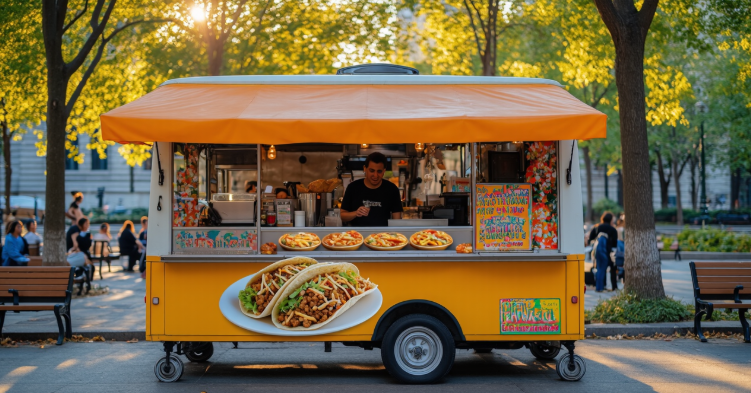

How To Start A Food Truck Business With No Money

Written by Merchant AlternativesMarch 17, 2025
Merchant Alternatives is reader-supported. When you make purchases through links on our site, we may earn a commission. This is always at no additional cost to you and helps us continue to provide accurate, transparent and up-to-date information on the things that matter most to your business, for free.

Starting a food truck business with no initial capital requires strategic planning, resourcefulness, and a willingness to navigate challenges creatively. While traditional food truck ventures often demand significant upfront investment (typically $75,000–$250,000), entrepreneurs can bypass these costs through alternative approaches. This guide outlines actionable steps to launch a mobile food business without breaking the bank, leveraging low-cost strategies and community-driven tactics.

Key Strategies for Launching a Food Truck With No Money

1. Start Small: Test Concepts With Carts or Stands

Begin with a food cart or stand to minimize startup costs while validating your culinary concept. This approach allows you to:

  • Operate at farmer’s markets, festivals, or high-traffic areas with lower permit requirements.
  • Gather feedback and refine recipes before scaling to a truck.
  • Build brand recognition and a loyal customer base incrementally.

2. Secure Funding Through Alternative Channels

Explore non-traditional financing options:

  • Crowdfunding: Platforms like Kickstarter or GoFundMe can help raise capital for equipment or permits.
  • Private Investors: Pitch your concept to friends, family, or local business angels in exchange for equity.
  • Grants and Loans: Research small-business grants or SBA-backed loans for restaurateurs.

3. Optimize Costs With Secondhand Equipment

Reduce expenses by:

  • Renting or buying used trucks/equipment instead of purchasing new.
  • Partnering with local suppliers for bulk ingredient discounts.

Critical Steps for Launching a Food Truck Business

Step 1: Develop a Unique Concept

Craft a bold, marketable idea (e.g., fusion cuisine or themed menus) to stand out in competitive markets. Conduct market research to identify underserved niches and validate demand.

Step 2: Build a Lean Business Plan

Outline:

  • Target audience and pricing strategy.
  • Financial projections (revenue, costs, and profit margins).
  • Marketing tactics, including social media and local partnerships.

Step 3: Navigate Licensing and Permits

Obtain location-specific permits, such as:

  • Food service licenses and health department certifications.
  • Parking/zoning permits to ensure legal operation.
  • Employer Identification Number (EIN) and business registration.

Step 4: Leverage Low-Cost Marketing

Focus on social media and community engagement:

  • Share high-quality food visuals and behind-the-scenes content.
  • Collaborate with influencers or host pop-up events to drive buzz.

Overcoming Challenges

While starting with no money demands flexibility, prioritize risk mitigation:

  • Test scalability by starting small to avoid overextending resources.
  • Adapt menus to reflect seasonal ingredient availability and customer feedback.
  • Network locally to secure partnerships with event organizers or complementary businesses.

By combining creativity, strategic planning, and a focus on community, entrepreneurs can successfully launch a food truck business without initial capital—turning passion into profit one step at a time.

What are some creative ways to fund a food truck business

Here are innovative strategies to fund a food truck business without traditional capital, synthesized from industry insights and expert recommendations:

Creative Funding Strategies for Food Trucks

1. Leverage Restaurant Incubators

Partner with commercial kitchen incubators that provide mentorship, shared equipment, and licensing guidance. These programs often charge minimal fees or take a small equity stake, offering a low-risk entry point for refining your concept before scaling.

2. Crowdfunding Campaigns

Platforms like Kickstarter or GoFundMe allow you to raise funds while testing market interest in your menu and branding. Offer rewards (e.g., free meals or branded merchandise) to incentivize donations. This approach doubles as marketing, helping build a loyal customer base early.

3. Private Investors and Equity Partnerships

Pitch your concept to angel investors, venture capitalists, or friends/family. Highlight unique value propositions (e.g., niche cuisine or community-driven themes) to secure funding in exchange for equity. Ensure compliance with SEC regulations for unaccredited investors.

4. Rent or Buy Secondhand Equipment

Reduce upfront costs by renting commercial kitchens or purchasing used food trucks/equipment. This minimizes capital outlay while allowing you to test operations before committing to ownership.

5. Grants and Community Programs

Apply for small-business grants targeting women, minorities, or veterans. These non-repayable funds can cover permits, marketing, or initial inventory.

6. Equipment Financing

Use equipment loans where the truck or appliances serve as collateral. Terms typically span 3–7 years, offering predictable repayment schedules.

7. Business Credit Cards

Utilize 0% APR credit cards for short-term expenses like ingredients or permits. Avoid long-term balances to sidestep high interest rates.

8. Hybrid Funding Models

Combine multiple sources (e.g., crowdfunding + grants + investor partnerships) to diversify risk and meet varied needs like permits, marketing, and equipment.

Key Considerations

  • Business Plan: A detailed plan with financial projections and market research is critical for securing loans or investors.
  • Cost Control: Prioritize low-cost marketing (e.g., social media) and seasonal menu adjustments to maximize ROI.
  • Credit Profile: Maintain strong personal/business credit to qualify for favorable loan terms.

By blending these strategies, entrepreneurs can launch a food truck with minimal upfront capital while building a sustainable foundation for growth.

Testing a food truck concept without significant capital requires creative, low-cost strategies that validate demand and operational feasibility. Here’s how to approach it:

Low-Cost Concept Testing Strategies

1. Pop-Up Events and Temporary Operations

Host pop-ups under rented canopies or borrowed equipment to simulate food truck operations. Partner with local businesses, festivals, or farmers’ markets to access foot traffic without truck costs. Use these events to:

  • Gather feedback via surveys or taste tests to refine recipes and branding.
  • Test scalability by tracking sales volume and production efficiency.

2. MVP (Minimum Viable Product) Approach

Adopt a lean MVP framework to validate core elements of your concept:

  • Focus on essentials: Use rented/borrowed equipment (e.g., generators, prep counters) to minimize upfront costs.
  • Track metrics: Monitor dishes sold, food costs, and customer satisfaction (e.g., NPS scores) to identify bottlenecks.

3. Ghost Kitchens or Commercial Incubators

Leverage shared kitchen spaces to test recipes and logistics without truck-specific investments. These often provide mentorship and licensing guidance at lower costs.

4. Social Media and Online Testing

Pre-validate demand through:

  • Virtual menus: Share mockups or sample images on platforms like Instagram to gauge interest.
  • Crowdsourced feedback: Host polls or Q&A sessions to refine branding and offerings.

Key Considerations

  • Logistics: Ensure your concept aligns with mobile operations (e.g., quick prep times, easy cleanup).
  • Regulatory Compliance: Research permits for pop-ups or shared kitchens to avoid legal issues.
  • Adaptability: Use feedback to pivot menus or branding before scaling.

By prioritizing low-cost, iterative testing, you can validate your concept without breaking the bank.

What are the key permits and licenses needed to operate a food truck

To operate a food truck legally, you’ll need to secure key permits and licenses that vary by location but generally include these core requirements:

Core Permits and Licenses

1. Business License

A business license (or vendor license) legitimizes your operation and allows you to register for taxes. Costs range from $50–$500, depending on location. Some cities cap the number of mobile food vendor licenses, so apply early.

2. Health Department Permit

Required for compliance with food safety standards, this permit involves passing health inspections of your truck’s storage, prep areas, and sanitation systems. Fees typically range from $50–$1,000.

3. Food Handler’s Permit

All staff (including owners) must complete food safety training and pass an exam to handle food legally.

4. Mobile Food Vendor License

Specific to food trucks, this permit authorizes mobile operations. Requirements vary by state (e.g., California’s Mobile Food Facility Permit).

5. Vehicle Registration

A commercial vehicle registration is mandatory for operating on public roads. Ensure your truck meets state weight and safety standards.

State-Specific Requirements

Licensing varies significantly by location:

StateKey Permits
CaliforniaMobile Food Facility Permit, Public Health Permit, Food Seller’s Permit
New YorkCommissary Letter of Agreement, Fire Certificates, Reseller’s Permit
MassachusettsMFEs Permit, Hawker and Peddler License, Certificate of Liability Insurance

Additional Requirements

  • Fire Safety Inspection: Verify fire extinguishers and suppression systems meet local codes.
  • Seller’s Permit: Required to collect sales tax.
  • Commercial Driver’s License (CDL): Needed if your truck exceeds weight thresholds (e.g., >26,001 lbs).
  • Employer Identification Number (EIN): For tax compliance and hiring staff.

Key Considerations

  • Research Local Rules: Zoning laws, parking restrictions, and health codes differ by city.
  • Renewals: Most licenses expire annually; track deadlines to avoid fines.
  • Compliance: Regular health inspections and fire safety checks are mandatory.

By securing these permits, you’ll ensure legal operation and build trust with customers. Always consult local authorities for precise requirements.

How can I market my food truck on a tight budget

Marketing a food truck on a tight budget requires leveraging low-cost, high-impact strategies that prioritize community engagement, digital visibility, and strategic partnerships. Here’s how to maximize reach without overspending:
how-to-start-a-food-truck-business-with-no-money-1.png

Cost-Effective Marketing Strategies

1. Social Media & Geo-Targeted Ads

  • Post high-quality visuals of dishes and behind-the-scenes moments on Instagram, TikTok, and Facebook to drive organic engagement.
  • Use location-based ads on platforms like Google or Facebook to target customers near your truck.
  • Host live updates (e.g., “Where we’ll be today”) to build anticipation.

2. Collaborate with Local Influencers

Partner with micro-influencers (local bloggers, students, or content creators) for free or low-cost promotions. Offer free meals in exchange for social media posts or reviews.

3. Loyalty Programs & Discounts

  • Create a punch-card system (e.g., “10th meal free”) using printed cards or a branded app.
  • Run limited-time offers (e.g., “Buy one, get one free”) to incentivize repeat visits.

4. Attend Festivals & Pop-Up Events

Apply to local festivals, farmers’ markets, or street fairs to gain visibility. Use these events to test menus and gather feedback.

5. Leverage Word-of-Mouth & Reviews

  • Encourage customers to leave reviews on Google or Yelp by offering small discounts for feedback.
  • Host free tastings at community events to build buzz.

6. Partner with Local Businesses

Collaborate with nearby offices, gyms, or cafes to offer catering or joint promotions (e.g., “Show this post for 10% off”).

7. Print Marketing on a Budget

  • Distribute flyers in high-traffic areas like parks or office districts.
  • Use branded vehicle wraps or eye-catching signage to stand out.

Key Considerations

  • Consistency: Maintain a unified brand voice across all channels.
  • Tracking: Use free tools like Google Analytics to monitor ad performance and customer demographics.
  • Community Focus: Prioritize local partnerships and events to build loyalty.

By combining these strategies, you can amplify your food truck’s visibility without breaking the bank.

What are some successful food truck business models

Successful food truck business models combine mobility, niche specialization, and strategic operational frameworks to maximize profitability. Below are proven approaches, supported by industry examples and trends:

1. Nomadic Street Food Model

Focus on high-quality, hyper-mobile operations that chase demand across events, festivals, and high-traffic areas.

  • Key Features:
    • Dynamic Locations: Operate at fairs, concerts, or trending spots (e.g., Pastardo, Cristi Crepes).
    • Online Integration: Use apps or social media to announce locations and pre-sell orders.
  • Example: Maracaiba and Rock Burger leverage mobility to target transient crowds.

2. Proximo Food Model

Blend online pre-orders with on-site sales for efficiency.

  • Key Features:
    • 70% Pre-Orders: Use apps or websites to secure advance sales, reducing waste and boosting margins.
    • 30% On-Site Sales: Sell remaining inventory at the truck’s physical location.
  • Example: Proximo Food exemplifies this tech-driven hybrid approach.

3. Niche Cuisine Specialization

Carve out a unique culinary identity to stand out in crowded markets.

  • Key Features:
    • Underserved Markets: Target gaps (e.g., Southern food in Eugene, OR, via Delacata).
    • Themed Menus: Focus on vegan/vegetarian options (Urban Hotdog Company) or pet-friendly dishes (Woofbowl).
  • Examples:
    • The Lobster Roller: Direct-sourced seafood for premium quality.
    • The Mobile Farmers’ Market: Fresh produce delivery in urban areas.

4. Seasonal Menu Adaptation

Rotate offerings to align with ingredients, weather, or trends.

  • Key Features:
    • Farm-to-Table: Califarmia updates menus based on local harvests.
    • Seasonal Promotions: Winter soups or summer ice cream to match demand.
  • Benefit: 59% of customers prefer seasonal items.

5. Catering & Partnerships

Expand revenue through corporate events, weddings, or local business collaborations.

  • Key Features:
    • Catering Services: Bee Chic specializes in weddings and parties.
    • Office Lunch Deals: Partner with nearby businesses for delivery or discounts.
  • Example: Kostina promotes its parent restaurant via event catering.

6. Mobile Ordering & Payment Integration

Enhance customer convenience with apps or third-party platforms.

  • Key Features:
    • Third-Party Apps: List on Roaming Hunger or Eat St. for visibility.
    • Branded Apps: Offer mobile ordering/payment to boost average order value (e.g., Taco Bell’s 20% increase).

7. Hybrid Models

Combine food trucks with brick-and-mortar expansion or complementary ventures.

  • Example: The Hamburger Foundation grew from one truck to restaurants and multiple trucks.

Key Considerations

  • Mobility: Prioritize locations with high foot traffic or event density.
  • Cost Control: Use shared kitchens or secondhand equipment to minimize overhead.
  • Brand Consistency: Maintain a unified voice across social media and in-person interactions.

By aligning your model with local demand and operational agility, you can replicate the success of these concepts.

Conclusion

Launching a food truck business with limited capital demands creativity, adaptability, and a relentless focus on community engagement. By leveraging low-cost strategies—from testing concepts through pop-ups and social media to securing permits and funding through grants or partnerships—entrepreneurs can turn passion into profit without breaking the bank.
Key Takeaways:

  1. Start small: Validate your concept with minimal risk using carts, shared kitchens, or pop-ups.
  2. Prioritize permits: Ensure legal compliance to build trust and avoid fines.
  3. Market smart: Use social media, collaborations, and seasonal menus to drive visibility and loyalty.
  4. Adopt proven models: Specialize in niche cuisine, hybrid operations, or catering to stand out in competitive markets.

While challenges like regulatory hurdles or tight budgets exist, the food truck industry rewards agility and innovation. By combining strategic planning with a customer-centric approach, even the leanest startups can thrive—turning a humble mobile kitchen into a sustainable, scalable business.

FAQs

1. How much does it cost to start a food truck business?

While traditional food trucks cost $75,000–$250,000, you can launch with $0–$10,000 by starting small (e.g., carts, pop-ups), renting equipment, or crowdfunding.

2. What permits do I need to operate a food truck?

Key permits include business licenses, health department permits, food handler’s certifications, and mobile vendor licenses. Requirements vary by location—always check local regulations.

3. How do I fund a food truck with no money?

Use crowdfunding, grants, private investors, or equipment financing. Partner with local businesses or incubators for shared resources.

4. What’s the best way to market a food truck on a tight budget?

Leverage social media (Instagram, TikTok), collaborate with influencers, and host pop-ups at festivals or high-traffic areas. Offer discounts for reviews or referrals.

5. How do I test my food truck concept without a truck?

Start with pop-ups, food carts, or shared kitchens to refine recipes and gauge demand. Use social media to pre-validate interest in your menu.

6. What’s the most profitable food truck business model?

Niche specialization (e.g., vegan, fusion cuisine) and hybrid models (e.g., catering + pop-ups) often yield the highest margins. Focus on underserved markets or seasonal menus.

7. Do I need a commercial kitchen to operate a food truck?

Most states require commissary agreements for food prep. Rent shared kitchen spaces or partner with restaurants to comply with health codes.

8. How do I handle food truck permits and licenses?

Research local zoning laws, health inspections, and parking restrictions. Renew licenses annually and track deadlines to avoid fines.

9. What’s the best way to manage food truck inventory and waste?

Use seasonal ingredients, pre-order systems, and small-batch prep to minimize waste. Partner with local suppliers for bulk discounts.

10. Can I expand my food truck into a restaurant or franchise?

Yes! Hybrid models (e.g., trucks + brick-and-mortar) or franchising are viable. Start small, build a loyal customer base, and scale incrementally.

Reference

Written by 

Merchant Alternatives