Merchant Alternatives is reader-supported. When you make purchases through links on our site, we may earn a commission. This is always at no additional cost to you and helps us continue to provide accurate, transparent and up-to-date information on the things that matter most to your business, for free.
The cleaning industry is a thriving sector valued at billions of dollars globally, making it an attractive option for entrepreneurs. Whether you aim to serve homeowners or businesses, starting a cleaning company allows you to be your own boss, set flexible working hours, and grow at your own pace. The key to success lies in strategic planning, understanding your target market, and delivering high-quality services that meet client expectations.
Steps to Start a Cleaning Business
1. Research Your Market
Identify the demand for cleaning services in your area.
Analyze competitors to understand their offerings and pricing.
Decide whether to focus on residential cleaning, commercial cleaning, or specialized services like carpet or eco-friendly cleaning.
2. Choose Your Services
Start with core services such as basic home cleaning or office maintenance.
Consider offering specialized options like deep cleaning, move-in/move-out cleaning, or sanitization services.
Ensure that you can deliver these services effectively before expanding.
3. Create a Business Plan
Develop a one-page or detailed business plan outlining your goals, target market, pricing strategy, and financial projections.
Include startup costs (licenses, equipment, insurance) and estimated monthly expenses.
4. Register Your Business
Choose a legal structure (e.g., sole proprietorship, LLC).
Register your business name and obtain necessary licenses and permits based on local regulations.
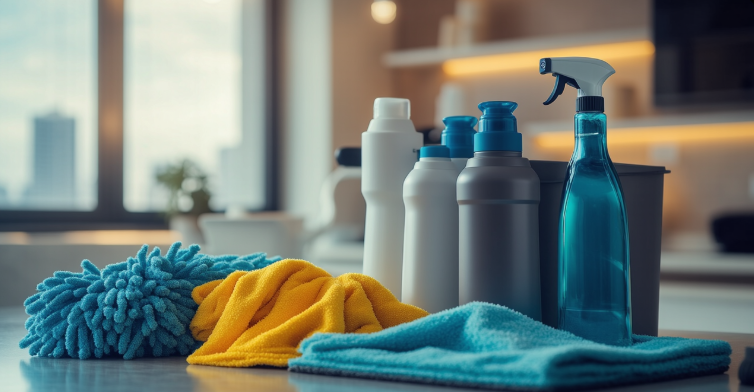
5. Purchase Supplies and Equipment
Start with basic tools like mops, vacuums, gloves, and cleaning solutions.
For specialized services, invest in equipment like carpet cleaners or pressure washers as needed.
6. Set Up Financial Systems
Open a business bank account for managing finances.
Use accounting software to track income and expenses effectively.
7. Market Your Business
Build an online presence through a website and social media platforms.
Use local advertising methods such as flyers or partnerships with real estate agents.
Offer promotions to attract your first customers.
8. Deliver Quality Services
Focus on providing excellent customer service and maintaining high standards of cleanliness.
Collect feedback from clients to improve your offerings.
9. Scale Your Business
Hire and train employees as demand grows.
Expand your service offerings or geographic reach over time.
By following these steps and maintaining a strong work ethic, you can establish a successful cleaning company that meets the needs of your community while building a reliable income stream.
What are the first steps to take when starting a cleaning business?
Starting a cleaning business requires strategic planning and execution. Here are the foundational steps to launch your venture effectively:
1. Conduct Market Research
Identify demand and competition: Analyze local cleaning services to determine gaps in offerings, pricing trends, and client preferences. Focus on residential, commercial, or specialized niches (e.g., eco-friendly or deep cleaning) to differentiate your business.
2. Develop a Business Plan
Define goals and strategy: Outline services, pricing models (e.g., per room, hourly, or contract-based), and financial projections. Include startup costs (licenses, insurance, supplies) and operational expenses like transportation and equipment.
3. Register Your Business
Legal compliance: Choose a business structure (e.g., sole proprietorship, LLC) and register your company name. Obtain necessary licenses, permits, and insurance to protect against liability and build client trust.
4. Secure Funding
Cover initial costs: Estimate expenses for supplies, marketing, and equipment. Consider loans, grants, or personal savings. For small operations, start with basic tools (mops, vacuums, gloves) and scale as demand grows.
5. Acquire Essential Equipment and Supplies
Prioritize quality: Begin with core items like cleaning solutions, microfiber cloths, and protective gear. For specialized services (e.g., carpet cleaning), invest in equipment later.
6. Establish Financial Systems
Track income and expenses: Open a business bank account and use accounting software to manage invoices, taxes, and profit margins.
7. Build a Marketing Strategy
Create visibility: Develop a website, leverage social media, and distribute flyers to target local clients. Offer promotions or discounts to attract early customers.
8. Deliver Quality Services
Focus on client satisfaction: Ensure reliability, thoroughness, and professionalism. Collect feedback to refine offerings and build referrals.
How can I market my cleaning business effectively?
To market your cleaning business effectively, focus on digital visibility, targeted outreach, and client-centric strategies. Below are actionable approaches based on proven methods:
1. Build a Strong Online Presence
Website optimization: Create a professional website with service listings, before/after photos, and a booking system. Use SEO to improve search engine rankings. Content marketing: Start a blog sharing cleaning tips or videos demonstrating techniques to showcase expertise.
2. Leverage Social Media
Platform-specific strategies:
Facebook/Instagram: Run targeted ads using demographic filters (e.g., homeowners in suburban areas).
LinkedIn: Connect with commercial clients and highlight your unique value proposition. Engagement: Share high-quality visuals, client testimonials, and interactive posts to boost reach.
3. Implement Paid Advertising
Google Ads: Use keywords like “commercial cleaning services” or “eco-friendly cleaning” to target local searches. Promotions: Offer discounts (e.g., 20% off first service) to drive immediate bookings.
4. Email and CRM Campaigns
Personalized emails: Send newsletters with cleaning tips, new service announcements, or referral incentives. CRM tools: Track leads, automate follow-ups, and analyze campaign success metrics like open rates or bookings.
5. Focus on Client Relationships
Referral programs: Reward existing clients for referrals to expand your customer base. Feedback loops: Collect reviews and use them to refine services and improve trust.
6. Local and Community Outreach
Partnerships: Collaborate with real estate agents or property managers for referrals. Events: Sponsor community clean-up initiatives or host workshops to build brand awareness.
7. Define Your Unique Value Proposition
Highlight what sets you apart (e.g., eco-friendly products, specialized sanitization services) to differentiate from competitors.
By combining these tactics, you’ll attract clients, build loyalty, and sustainably grow your cleaning business.
What are the most common mistakes new cleaning business owners make
New cleaning business owners often encounter challenges that can hinder their growth and profitability. Here are the most common mistakes and how to avoid them:
1. Starting Without a Clear Business Plan
Mistake: Diving into the business without a roadmap for goals, target market, and financial planning.
Solution: Develop a detailed business plan that outlines your services, pricing, marketing strategy, and long-term objectives.
2. Neglecting Employee Vetting and Training
Mistake: Hiring unqualified staff or failing to provide proper training, resulting in poor service quality.
Solution: Conduct thorough background checks, skill assessments, and ongoing training to ensure consistency and professionalism.
3. Underestimating Initial Costs
Mistake: Assuming minimal startup costs and being unprepared for expenses like licenses, insurance, and quality equipment.
Solution: Create a comprehensive budget that includes all potential costs to avoid financial surprises.
4. Skimping on Quality Tools and Supplies
Mistake: Using low-quality cleaning products or equipment to save money, which can lead to inefficiency or client dissatisfaction.
Solution: Invest in durable, high-quality tools that enhance performance and impress clients.
5. Poor Time Management
Mistake: Failing to organize schedules effectively, leading to missed appointments or delays.
Solution: Use scheduling tools or apps to streamline task assignments and ensure timely service delivery.
6. Ignoring Marketing Efforts
Mistake: Relying solely on word-of-mouth without exploring other marketing avenues.
Solution: Build an online presence through a website, social media platforms, SEO, and local advertising to attract more clients.
7. Overpromising and Underdelivering
Mistake: Taking on too many jobs or promising unrealistic results without the resources to deliver.
Solution: Start small with manageable projects and scale up as you gain experience and resources.
8. Not Preparing for Slow Seasons
Mistake: Failing to anticipate seasonal fluctuations in demand.
Solution: Offer seasonal promotions or diversify services (e.g., carpet cleaning during rainy months) to maintain cash flow year-round.
9. Failing to Monitor Competitors
Mistake: Overlooking competitor strategies and pricing models.
Solution: Regularly analyze competitors to stay competitive and refine your offerings.
10. Ignoring Customer Feedback
Mistake: Not addressing client complaints or adapting services based on feedback.
Solution: Actively seek reviews, address concerns promptly, and use feedback to improve service quality.
By avoiding these pitfalls and focusing on strategic planning, quality service delivery, and effective marketing, new cleaning business owners can position themselves for long-term success.
How do I determine the right pricing for my cleaning services
Determining the right pricing for your cleaning services requires balancing profitability, market competitiveness, and client value. Here’s a structured approach based on industry strategies and formulas:
1. Calculate Your Costs
Labor: Start with hourly labor costs (including payroll taxes and benefits). For example, if your labor cost is $25/hour, double it to $50/hour to account for overhead and profit. Supplies and overhead: Factor in cleaning products, equipment, insurance, and administrative expenses. Formula:
Per square foot: $0.10–$0.17 for standard cleaning; up to $0.22 for deep cleaning.
Flat rate: Fixed price per home (e.g., $170–$220 for a standard house cleaning).
Per room: Average $50–$100 per room (e.g., $40 for living room, $60 for bathroom).
Commercial Services
Per square foot: $0.04–$0.50 (varies by surface type).
Hourly rate: $25–$90/hour (ideal for uncertain scopes).
Flat rate: Best for recurring contracts with predictable tasks.
3. Analyze Competitors
Research local competitors’ pricing to avoid undercutting or overcharging. For example, commercial cleaners often charge $0.07–$0.15/sq ft or $50–$100/hour.
Bundled packages: Offer tiered options (e.g., basic, deep clean, seasonal packages) to increase average revenue per client.
5. Test and Adjust
Start with a default package that aligns with your target market’s needs and your operational capacity. Monitor client feedback and adjust pricing based on demand and profitability.
Example Pricing Calculator
Factor
Residential
Commercial
Labor Cost
$25–$40/hour
$30–$60/hour
Markup
2x (for overhead)
2x (for overhead)
Client Price
$50–$80/hour
$60–$120/hour
Square Foot Rate
$0.10–$0.22
$0.04–$0.50
By combining cost analysis, market research, and strategic pricing models, you can set rates that attract clients while ensuring long-term profitability.
What kind of insurance do I need for a cleaning business
To protect your cleaning business from financial risks, you’ll need a combination of insurance policies tailored to your operations. Below are the essential coverages and providers to consider:
1. General Liability Insurance
What it covers:
Client property damage (e.g., broken items during cleaning).
Third-party injuries (e.g., slip-and-fall accidents caused by your work).
Legal defense costs if sued over covered incidents.
Providers:
Insurance Canopy: Offers specialized general liability coverage with customizable policies.
Thimble: Provides flexible, on-demand policies (e.g., hourly or monthly coverage).
2. Workers’ Compensation Insurance
What it covers:
Medical bills and lost wages for employees injured on the job. Requirement: Mandatory in most states if you have employees. Providers:
biBERK: Tailored workers’ comp policies with online management.
USAA: Affordable options for military-affiliated businesses.
3. Commercial Property Insurance
What it covers:
Damage to your office, equipment, or supplies (e.g., theft, fire, or natural disasters).
Providers:
The Hartford: Includes property coverage in Business Owner Policies (BOPs).
Insurance Canopy: Tools and equipment insurance for stolen or damaged gear.
4. Fidelity Bonds (Janitorial Bonds)
What it covers:
Client losses due to employee theft (e.g., stolen valuables during cleaning).
Providers:
Nationwide: Offers fidelity bonds to protect against employee dishonesty.
Insurance Canopy: Includes janitorial bonds in customizable policies.
5. Commercial Auto Insurance
What it covers:
Accidents involving company vehicles or employee-owned vehicles used for work.
Providers:
Nationwide: Reliable coverage for business vehicles.
Hiscox: Flexible payment plans, though commercial auto may require partner providers.
6. Business Interruption Insurance
What it covers:
Lost revenue and expenses if your business halts due to covered events (e.g., fire, flood).
Providers:
The Hartford: Bundled in BOPs alongside liability and property coverage.
7. Professional Liability (Errors & Omissions)
What it covers:
Claims of poor service quality (e.g., unsatisfactory cleaning results).
Providers:
Thimble: Offers professional liability insurance for small businesses.
Compare quotes from multiple providers to find the best rates.
Review coverage limits annually to ensure alignment with business growth.
By securing these policies, you’ll mitigate risks and build trust with clients while protecting your financial stability.
Conclusion
Starting a cleaning business requires careful planning, strategic execution, and adaptability. By avoiding common pitfalls, pricing services competitively, and securing the right insurance, you can build a sustainable venture that meets client needs while ensuring profitability. Key Takeaways:
Market Research and Planning: Understand your target audience, competitors, and financial requirements to lay a strong foundation.
Pricing: Balance costs, market rates, and value to attract clients without sacrificing margins.
Insurance: Protect your business with policies like general liability, workers’ compensation, and fidelity bonds to mitigate risks.
Client-Centric Focus: Prioritize quality service, feedback, and referrals to drive loyalty and growth.
Whether you’re serving residential or commercial clients, success hinges on consistency, reliability, and continuous improvement. By following these guidelines, you’ll position your business to thrive in a competitive industry while building a reputation for excellence.
FAQs
1. What licenses and permits do I need to start a cleaning business?
Answer: Requirements vary by state, but common needs include a business license, sales tax permit (if selling supplies), and local permits (e.g., zoning approvals). Check your state’s small business administration website for specifics.
2. How much does it cost to start a cleaning business?
Answer: Startup costs range from $500–$5,000, depending on equipment, insurance, and marketing. Basic supplies (mops, vacuums, cleaning solutions) cost ~$500, while insurance and licenses add ~$1,000–$3,000 annually.
3. What services should I offer first?
Answer: Start with core services like basic home cleaning or office maintenance. Expand to specialized offerings (e.g., deep cleaning, sanitization) as demand grows.
4. How do I price my cleaning services?
Answer: Calculate costs (labor, supplies, overhead) and apply a 20–25% profit margin. Use models like per square foot ($0.10–$0.22 for residential) or flat rates ($170–$220 per home).
5. What insurance do I need for a cleaning business?
Answer: General liability, workers’ compensation (if hiring employees), and fidelity bonds (to protect against employee theft). Commercial property and auto insurance are also recommended.
6. How do I market my cleaning business effectively?
Answer: Build a website, use social media ads, and partner with local real estate agents or property managers. Offer discounts for first-time clients to drive bookings.
7. Should I hire employees or work solo?
Answer: Start solo to minimize costs. Hire employees as demand grows, ensuring thorough background checks and training to maintain quality.
8. How do I handle slow seasons?
Answer: Offer seasonal promotions (e.g., holiday deep cleaning) or diversify services (e.g., carpet cleaning in rainy months). Use downtime to refine marketing or client outreach.
9. What’s the most common mistake new cleaning business owners make?
Answer: Underestimating costs (e.g., insurance, quality equipment) or overpromising services without the resources to deliver. Start small and scale gradually.
10. How do I ensure client satisfaction and retain customers?
Answer: Collect feedback, respond promptly to complaints, and reward referrals. Offer consistent, reliable service and highlight unique perks (e.g., eco-friendly products) to build loyalty.