
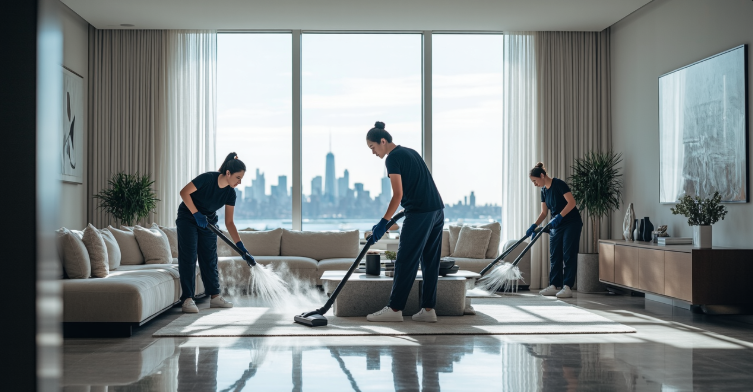

Starting a cleaning business in New York offers a lucrative opportunity in a city with relentless demand for professional services. From high-rise apartments to bustling commercial spaces, NYC’s diverse market provides ample room for entrepreneurs to build scalable ventures. However, navigating the city’s competitive landscape and regulatory requirements demands careful planning. Below is a structured guide to launching a successful cleaning business in New York.
New York City’s fast-paced environment creates a constant need for reliable cleaning services. Residential clients prioritize hygiene and convenience, while commercial spaces require specialized solutions for high-traffic areas. Emerging trends like eco-friendly cleaning and deep sanitization further expand opportunities for businesses offering tailored services. With minimal upfront costs compared to other industries, cleaning businesses can quickly scale while maintaining profitability.
Identify whether you’ll focus on residential, commercial, or niche sectors like post-construction cleanup or green cleaning. NYC’s diverse neighborhoods and industries allow specialization, which can differentiate your business from competitors.
A comprehensive plan should include:
Hire staff with strong work ethics and train them in cleaning techniques, customer service, and safety protocols. Competitive wages and benefits help retain talent in NYC’s competitive job market.
Invest in eco-friendly products, industrial-grade tools, and reliable transportation. Bulk purchases from retailers like Costco can reduce costs.
Leverage digital marketing (social media, SEO) and word-of-mouth referrals to attract clients. Highlight unique offerings, such as 24/7 availability or specialized certifications.
To stand out, emphasize reliability, flexibility, and customer satisfaction. Consider partnering with local businesses or offering bundled services (e.g., move-in/move-out cleaning) to expand your client base. Franchising models, like Two Maids, can also provide structured systems for scaling.
By combining strategic planning with adaptability to NYC’s evolving needs, your cleaning business can thrive in one of the world’s most dynamic markets.
Starting a cleaning business in NYC requires initial startup costs ranging from $2,000 to $10,000, depending on business scale and services offered. Below is a detailed breakdown of key expenses:
| Business Type | Estimated Cost | Key Factors |
|---|---|---|
| Microbusiness (solo) | ~$3,000 | Minimal equipment, no employees. |
| Home-based franchise | $2,000–$5,000 | Includes branding and operational support. |
| Larger operations | $5,000–$10,000+ | Commercial-grade equipment, transportation, and staff. |
For a biweekly residential service (e.g., 4–5 hours with two cleaners), pricing might start at $300 per session to cover labor ($20/hour × 2 workers × 5 hours = $200) and other expenses.
By prioritizing cost-effective strategies like bulk supply purchases and targeted marketing, entrepreneurs can optimize ROI in NYC’s competitive market.
To differentiate your cleaning business in NYC’s competitive market, focus on specialization, technology integration, customer-centric strategies, and sustainability. Below are actionable approaches supported by industry insights and trends:
Target underserved markets with tailored offerings:
Adopt tools that enhance service quality and client trust:
Stand out through reliability and flexibility:
Build credibility through training and industry standards:
Expand reach through strategic alliances:
Align with NYC’s eco-conscious trends:
| Strategy | Example | Impact |
|---|---|---|
| Niche specialization | Post-construction cleanup for luxury condos | Targets high-margin, underserved clients. |
| Tech integration | Real-time performance dashboards | Builds trust with data-driven transparency. |
| Customer-centric perks | Free move-in/move-out inspections | Encourages loyalty and referrals. |
By combining these tactics, your business can carve a unique identity in NYC’s crowded market while addressing evolving client demands for quality, convenience, and sustainability.
To operate a cleaning business in NYC, you’ll need to secure specific licenses and permits to comply with state and local regulations. Below is a breakdown of requirements based on the search results:
Most cleaning businesses in NYC do not require a specialized license, but you must register your business with the New York Secretary of State. This includes:
Mandatory for tax compliance, this certificate allows you to collect and remit sales tax on services. Apply through the New York State Department of Taxation and Finance.
Required for tax purposes, even if operating as a sole proprietor. Obtain an EIN from the IRS.
Check with NYC’s Department of Consumer Affairs (DCWP) or local municipalities for additional requirements, such as:
While not a license, insurance is critical for liability protection:
For specialized services (e.g., chemical use), consult the NYC Department of Health and Mental Hygiene (DOHMH).
By following these steps, your business will meet NYC’s legal requirements and operate with credibility.
To structure a business plan for a cleaning company in NYC, focus on clarity, market alignment, and operational feasibility. Below is a tailored framework based on industry best practices and NYC-specific requirements:
Purpose: Introduce your business’s mission, unique value proposition, and growth goals.
Key elements:
Purpose: Define your business’s identity and structure.
Key elements:
Purpose: Assess demand, competition, and trends in NYC.
Key elements:
Purpose: Detail your cleaning services and unique features.
Key elements:
Purpose: Outline daily workflows and logistics.
Key elements:
Purpose: Showcase leadership and expertise.
Key elements:
Purpose: Define how to attract and retain clients in NYC’s competitive market.
Key elements:
Purpose: Project costs, revenue, and growth.
Key elements:
Purpose: Ensure legal and regulatory adherence.
Key elements:
| Section | Key Focus | NYC-Specific Considerations |
|---|---|---|
| Market Analysis | Targeting high-income neighborhoods | Competing with established franchises |
| Services Offered | Eco-friendly cleaning | Align with NYC’s sustainability trends |
| Operations Plan | Staff training in safety protocols | Compliance with NYC labor laws |
| Financial Plan | Pricing for move-in/move-out services | High startup costs (e.g., transportation) |
By integrating these elements, your plan will address NYC’s unique challenges while positioning your business for scalability and profitability.
The most in-demand cleaning services in NYC reflect the city’s diverse needs, from residential luxury to commercial sanitization. Based on market trends and service providers highlighted in search results, here are the top offerings:

Highly sought after for move-in/move-out transitions, post-renovation, or seasonal deep sanitization.
Critical for high-traffic spaces like offices, retail stores, and restaurants.
Tailored for high-end homes, luxury estates, and unique materials.
Growing demand for sustainable practices.
Essential for real estate transitions and new builds.
Valued for last-minute needs or urgent sanitization.
Steady demand for weekly/biweekly home or office upkeep.
| Service | Key Providers | Target Market |
|---|---|---|
| Residential Deep Cleaning | Sparkle & Shine, Sunlight Cleaning | Homeowners, real estate agents |
| Commercial Sanitization | NYC Steam Cleaning, Prospect Cleaning NYC | Offices, retail, medical facilities |
| Luxury Cleaning | Luxury Cleaning, Maid Marines | High-income households |
| Eco-Friendly Cleaning | Sunlight Cleaning, My Home Carpet Cleaning | Health-conscious clients |
By aligning services with these trends, businesses can capitalize on NYC’s evolving demands for quality, specialization, and convenience.
Starting a cleaning business in NYC requires strategic planning, adaptability, and a deep understanding of the city’s competitive landscape. By focusing on niche services, technology integration, and customer-centric strategies, entrepreneurs can carve a unique identity in one of the world’s most dynamic markets.
From securing licenses and permits to differentiating through eco-friendly practices or 24/7 availability, every decision impacts scalability and profitability. NYC’s relentless demand for residential deep cleaning, commercial sanitization, and luxury services offers ample opportunities, but success hinges on aligning offerings with evolving trends—such as sustainability, tech-driven efficiency, and post-pandemic hygiene standards.
By prioritizing quality, transparency, and community engagement, your business can thrive in a city where reliability and innovation are non-negotiable. Whether targeting high-rise apartments, bustling offices, or niche sectors like post-construction cleanup, NYC’s diverse market rewards businesses that blend local expertise with forward-thinking strategies.
You’ll need a business registration (LLC or corporation), Certificate of Authority for sales tax compliance, and general liability insurance. Check with NYC’s Department of Consumer Affairs for local permits.
Initial costs range from $2,000 to $10,000, depending on scale. Key expenses include licenses ($100–$500), supplies ($300–$2,000), and insurance ($500–$1,500 annually).
Residential deep cleaning (e.g., move-in/move-out) and commercial sanitization are top choices, driven by NYC’s real estate turnover and post-pandemic hygiene needs.
Focus on eco-friendly practices, 24/7 availability, or niche services like post-construction cleanup. Highlight certifications (e.g., OSHA compliance) and tech tools (e.g., online booking).
Yes, if you hire employees. NYC requires workers’ compensation to cover workplace injuries.
Align rates with NYC’s competitive market. For example, residential deep cleaning starts at $300+/session, while commercial contracts vary by square footage and frequency.
Use digital marketing (SEO, Google Ads) to target high-density neighborhoods and partner with property managers for referrals. Highlight unique perks like free move-in inspections.
Yes. Operate as a solo business to minimize upfront costs. Scale by hiring staff later as demand grows.
Register your business with the NY Secretary of State, obtain a Certificate of Authority, and verify local permits with the Department of Consumer Affairs.
Demand is strong, especially for eco-friendly, tech-integrated, and specialized services. Focus on reliability and adaptability to thrive in NYC’s fast-paced market.