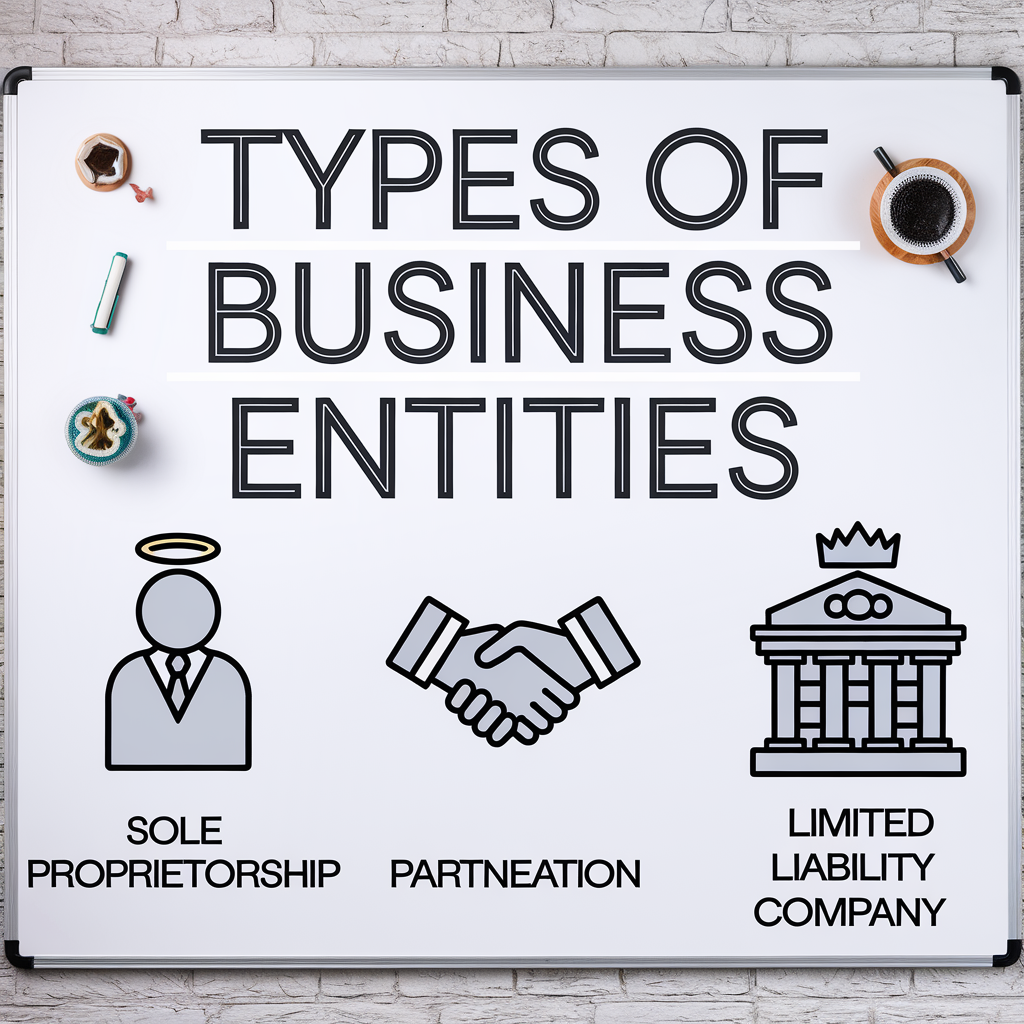
Business entities are legal structures that define how a company is organized, operated, and taxed, with common types including sole proprietorships, partnerships, limited liability companies (LLCs), and corporations. Each structure offers distinct advantages and disadvantages in terms of liability protection, tax implications, and management flexibility, making the choice of entity type a crucial decision for business owners.
Sole Proprietorship Overview
A sole proprietorship is the simplest and most common form of business structure, characterized by a single individual owning and operating the business. This entity type offers complete control over business decisions and easy setup, with minimal paperwork required. However, it comes with significant personal liability, as the owner is personally responsible for all business debts and obligations. From a tax perspective, business income is reported on the owner's personal tax return, simplifying the filing process but potentially leading to higher tax rates as the business grows.
Types of Partnerships Explained
Partnerships involve two or more individuals sharing ownership of a business, with several distinct types offering varying levels of liability and control. General partnerships distribute responsibility and profits equally among partners, while limited partnerships (LPs) include both general partners with full liability and limited partners with restricted liability and involvement. Limited liability partnerships (LLPs) provide protection for partners against the actions of other partners, making them popular among professional service firms. Each partnership type has unique tax implications and management structures, allowing businesses to choose the most suitable arrangement for their specific needs and goals.
LLCs and Corporations Compared
Limited Liability Companies (LLCs) and corporations are two popular business structures that offer liability protection for owners. LLCs provide flexibility in management and taxation, allowing members to choose between being taxed as a partnership or corporation. They require less formal record-keeping compared to corporations. Corporations, on the other hand, exist as separate legal entities from their owners and can be classified as C corporations or S corporations. C corporations face double taxation on corporate income and shareholder dividends, while S corporations offer pass-through taxation but have restrictions on ownership structure. Both entities provide strong personal liability protection, but corporations generally offer the highest level of protection.
Choosing the Right Business Entity
Selecting the appropriate business structure is a critical decision that impacts liability protection, taxation, management flexibility, and fundraising capabilities. Key factors to consider include:
- The number of owners involved
- Desired level of personal liability protection
- Tax implications and preferences
- Complexity of formation and ongoing compliance requirements
- Future growth plans and potential need for outside investment
Consulting with legal and financial professionals is crucial to determine the optimal structure for specific business needs. As businesses evolve, reassessing and potentially changing the entity type may be necessary to align with new goals and circumstances.
LLC Key Benefits
Limited Liability Companies (LLCs) offer several key advantages that make them an attractive business structure for many entrepreneurs:
- Personal Asset Protection: LLCs provide a shield between the owner's personal assets and business liabilities, protecting members from being personally responsible for company debts or legal issues.
- Tax Flexibility: LLCs can choose how they are taxed, allowing owners to optimize their tax situation. They can elect to be taxed as a sole proprietorship, partnership, S corporation, or C corporation.
- Management Flexibility: LLCs offer freedom in management structure, without the need for a board of directors or strict record-keeping requirements.
- Credibility and Ease of Formation: Forming an LLC enhances business credibility while being relatively inexpensive and straightforward to set up compared to corporations.
These advantages make LLCs particularly suitable for small businesses seeking liability protection and tax benefits without the complexities of corporate structures.
Ownership and Liability Differences
Sole proprietorships and general partnerships differ primarily in ownership structure and liability distribution:
- Ownership: A sole proprietorship has a single owner, while a general partnership involves two or more individuals sharing ownership and management responsibilities.
- Liability: In a sole proprietorship, the owner bears full personal liability for business debts and obligations. General partnerships distribute liability among all partners, with each partner potentially responsible for the actions of others.
- Decision-making: Sole proprietors have complete control over business decisions, whereas general partners must reach agreements on business matters.
- Taxation: Both are considered "pass-through" entities for tax purposes, but sole proprietors report business income on their personal tax returns using Schedule C, while general partnerships file Form 1065 and provide Schedule K-1 to each partner.
- Credibility: General partnerships may be perceived as more credible by third parties due to shared responsibility and multiple owners.
While both structures offer simplicity in formation and dissolution, the choice between them ultimately depends on individual business needs, risk tolerance, and management preferences.
C Corp vs S Corp Taxation
C corporations and S corporations have distinct tax implications that significantly impact business owners' financial strategies:
- Double Taxation vs. Pass-Through Taxation: C corporations face double taxation, with profits taxed at the corporate level (21% flat rate) and again when distributed as dividends to shareholders. S corporations, as pass-through entities, avoid this double taxation, with profits taxed only once at the individual shareholder level.
- Tax Flexibility: C corporations offer more flexibility in retaining earnings for growth without triggering additional shareholder taxes. S corporations must distribute profits to shareholders annually, potentially resulting in higher personal tax liabilities. However, S corporations can often minimize tax burden through strategic salary and dividend distributions.
- Deductions and Losses: C corporations can carry forward net operating losses (NOLs) to offset future profits, though limited to 80% of taxable income in any given year post-2017. S corporation losses pass through to shareholders, potentially offsetting other personal income.
- State Taxation: While most states recognize S corporation status, some may still impose entity-level taxes, potentially negating some federal tax advantages.
The choice between C and S corporation status depends on factors such as growth plans, desired ownership structure, and long-term tax strategy. Consulting with tax professionals is crucial for making an informed decision tailored to specific business needs.
Limited Partner Responsibilities
Limited partners in a limited partnership play a crucial role as investors who provide capital to the business without participating in its day-to-day management. Their primary responsibilities include:
- Contributing capital: Limited partners invest money or assets in exchange for a share of the partnership's profits.
- Limited liability: Their financial risk is restricted to the amount of their investment, protecting personal assets from the partnership's debts or legal issues.
- Passive involvement: Limited partners do not participate in the daily operations or decision-making processes of the business, maintaining a "silent" or "passive" investor status.
- Exercising voting rights: While generally restricted, limited partners may have voting rights on fundamental changes to the partnership, such as dissolution or amendments to the partnership agreement.
Limited partners benefit from the potential for profit sharing and investment diversification while enjoying limited liability protection. However, they must be cautious not to engage in management activities, as doing so could jeopardize their limited liability status.
Benefit Corporation Advantages
Benefit corporations offer unique advantages for socially conscious entrepreneurs and businesses:
- Legal protection for social mission: Directors can consider stakeholder interests alongside shareholder profits without fear of legal repercussions, allowing pursuit of public benefits while maintaining profitability.
- Enhanced accountability: Annual benefit reports and third-party standards ensure transparency in achieving stated social and environmental goals.
- Attracting mission-aligned investors: Benefit corporation status signals commitment to social impact, potentially drawing socially responsible investors and conscious consumers.
- Brand differentiation: Companies can distinguish themselves as purpose-driven enterprises in the marketplace, potentially enhancing customer loyalty and employee retention.
- Flexibility in decision-making: Leaders can balance financial returns with societal impact, considering effects on employees, communities, and the environment.
While benefit corporations face additional reporting requirements and potential scrutiny, they provide a legal framework for businesses to pursue profit with purpose, creating value for both shareholders and society.
Common Entity FAQs
- Can I change my business entity type after formation?
Yes, it's possible to change your business entity type, but the process can be complex and may have tax implications. Consult with a legal professional to understand the steps and consequences specific to your situation.
- Do I need to register my business in multiple states?
If you conduct business in multiple states, you may need to register as a foreign entity in those states. Requirements vary, so check with each state's Secretary of State office for specific regulations.
- How often do I need to file reports for my business entity?
Reporting requirements vary by entity type and state. Many states require annual or biennial reports. For example, in California, most entities must file a Statement of Information annually or biennially.
- Can a single-member LLC be taxed as an S corporation?
Yes, a single-member LLC can elect to be taxed as an S corporation by filing Form 2553 with the IRS. This can potentially offer tax advantages, but consult with a tax professional to determine if it's right for your situation.
- What's the difference between an LLC and a corporation in terms of management structure?
LLCs offer more flexibility in management, allowing for member-managed or manager-managed structures. Corporations typically have a more rigid structure with a board of directors, officers, and shareholders.
Choosing Your Entity Wisely
Selecting the right business entity is a critical decision that can significantly impact a company's legal standing, tax obligations, and operational flexibility. While each entity type offers unique advantages, the optimal choice depends on factors such as ownership structure, liability concerns, tax preferences, and long-term business goals. Sole proprietorships and partnerships offer simplicity but limited protection, while LLCs and corporations provide stronger liability shields and varied tax options.
As businesses evolve, it's essential to periodically reassess the chosen entity structure to ensure it continues to align with the company's needs and objectives. Consulting with legal and financial professionals can provide valuable insights into the nuances of each entity type and help entrepreneurs make informed decisions that support their business's growth and success. Ultimately, the right business entity should balance legal protection, tax efficiency, and operational flexibility to create a solid foundation for sustainable business development.
References